You Won’t Believe What I Found Wandering Montevideo’s Hidden Public Spaces
Wandering through Montevideo, I stumbled upon something most travelers miss—its soul lives in plain sight, tucked into plazas, benches, and seaside promenades. These public spaces aren’t just gaps between buildings; they’re where life unfolds. Locals laugh, kids play, artists sketch—no agenda, just being. It made me rethink what travel is really about. In a world where itineraries are packed with must-see sights and Instagrammable corners, Montevideo offers a quieter revelation: the true essence of a city reveals itself not in grand monuments, but in the everyday rhythm of shared spaces. Here, urban life isn’t performed for visitors—it simply exists, open and unguarded, for anyone willing to sit, observe, and belong, even if only for an hour.
First Impressions: The Pulse of the City in Public Life
Arriving in Montevideo, expectations leaned toward colonial architecture, bustling markets, and perhaps a tango performance by the waterfront. What unfolded, however, was far more subtle and deeply human. Instead of monumental sights, the city greeted with moments: an elderly man feeding pigeons in a sunlit square, a group of teenagers sharing mate under a eucalyptus tree, a street vendor offering empanadas from a folding table near a bus stop. These weren’t staged experiences—they were the unscripted fabric of daily life, played out in the open-air theaters of public space.
The warmth of these interactions wasn’t loud or forceful; it was in the ease with which strangers acknowledged one another. A nod, a smile, a shared bench—small gestures that signaled inclusion rather than observation. Unlike cities where public areas feel transactional or surveilled, Montevideo’s spaces carry a sense of ownership that belongs to everyone. There is no need to spend money or follow rules to belong. You simply exist, and that is enough. This quiet invitation to participate, even passively, is what sets the city apart.
What surprised most was how much of Montevideo’s character revealed itself not in curated attractions, but in its pauses. While museums and historic buildings have their place, the city’s true rhythm—its breath, its heartbeat—was felt on park benches, in the shade of jacaranda trees, along the slow curve of the Rambla. These spaces are not afterthoughts; they are central to how residents live, connect, and recharge. For the visitor, they offer a rare gift: the chance to experience a city not as a spectator, but as a temporary citizen.
Ciudad Vieja: Where History Meets Street-Level Living
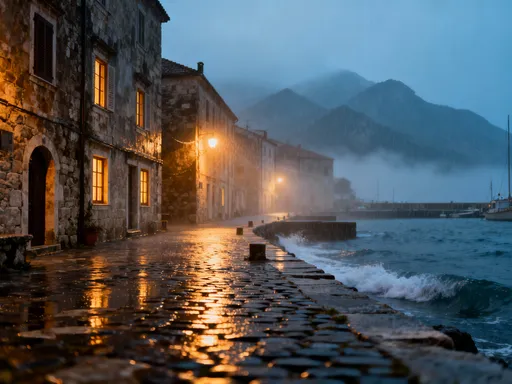
The historic heart of Montevideo, Ciudad Vieja, is often described in terms of its colonial past, its cobblestone streets, and preserved architecture. But to walk through it with only history in mind is to miss its present. This neighborhood thrives not in museums or guided tours, but in the way its public spaces pulse with contemporary life. Plazas here are not relics—they are living rooms for the community, where generations gather, conversations flow, and time slows.
Plaza Matriz, anchored by the Metropolitan Cathedral, is a prime example. By mid-morning, the square fills with retirees playing chess on stone tables, children chasing bubbles blown by a street performer, and couples sipping coffee from nearby cafés. The air hums with a gentle energy—neither rushed nor idle, but balanced between activity and repose. Unlike plazas in other Latin American capitals that can feel performative or overly touristed, Plaza Matriz retains an authenticity. Locals dominate the scene, and visitors who linger are welcomed not as customers, but as fellow participants in the day’s quiet drama.
Street performers add to the rhythm without disrupting it. A guitarist strums softly near a fountain, not demanding attention but offering a soundtrack to the moment. An artist sketches a portrait with quick, confident strokes, capturing the lines of a willing subject. These acts aren’t spectacles—they are threads in the neighborhood’s daily weave. The space allows for spontaneity, for unplanned encounters, for the kind of human connection that can’t be scheduled or monetized.
What makes Ciudad Vieja’s public life so compelling is its accessibility. There are no tickets, no opening hours, no dress code. A bench is free for anyone to sit on, whether you’re a local accountant on lunch break or a traveler with a worn map in hand. This democratic use of space fosters a rare kind of intimacy—one built not on grand gestures, but on the simple act of sharing sunlight and silence.
The Rambla: A Coastal Lifeline Like No Other
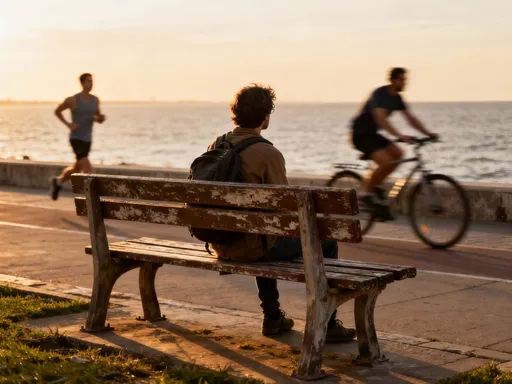
If Montevideo has a spine, it is the Rambla—a 22-kilometer ribbon of walkway that traces the curve of the Río de la Plata. More than a promenade, it is a shared civic artery, used by joggers, cyclists, fishermen, couples, and solo wanderers alike. At sunrise, the Rambla belongs to runners and dog walkers, their breath visible in the cool morning air. By midday, families spread blankets on the grassy banks, children building sandcastles near the water’s edge. As evening falls, the path fills with cyclists, strollers, and musicians tuning guitars for impromptu performances.
What makes the Rambla extraordinary is not its length, but its inclusivity. Unlike waterfront developments in other cities that prioritize luxury apartments or tourist attractions, Montevideo’s Rambla remains resolutely public. There are no gated sections, no privatized views. Benches face the water, not commercial storefronts. Bike lanes are well-maintained, and pedestrian paths are wide enough to accommodate both swift movement and slow contemplation. This deliberate design ensures that the riverfront belongs to everyone, regardless of income or status.
The Rambla also reflects the Uruguayan value of *tranquilidad*—a cultural preference for calm, balance, and unhurried living. People don’t rush along the path; they stroll, pause, sit. It’s common to see someone standing at the railing, simply watching the water, lost in thought. Others bring books, thermoses of mate, or portable chairs. The space encourages presence, not productivity. It’s a rare urban environment where doing nothing is not only allowed but celebrated.
For visitors, the Rambla offers a masterclass in how public space can shape identity. It is not just a place to visit; it is a way of life made visible. Walking its length, one begins to understand Montevideo not as a collection of sights, but as a city defined by its relationship to time, nature, and community. The river is not a backdrop—it is a companion, a constant presence that grounds the city in something larger than itself.
Parks as People’s Sanctuaries: Parque Rodó and Beyond
While the Rambla defines the city’s coastal edge, its parks serve as green sanctuaries in the urban core. Parque Rodó, one of Montevideo’s most beloved green spaces, exemplifies how public parks can be both lively and restorative. By day, the park buzzes with activity: children ride colorful bumper cars in the small amusement area, students study beneath shaded canopies, and elderly couples walk slowly along tree-lined paths. A riverside promenade invites fishing, while open lawns host kite flyers and picnicking families.
What stands out is the park’s balance between structure and freedom. It offers amenities—a playground, a museum, food kiosks—but never feels overly managed or commercialized. Unlike parks in some major cities that prioritize aesthetics over use, Parque Rodó is designed for people, not photographs. Grass is meant to be sat on, paths are wide enough for shared use, and seating is plentiful and varied. This thoughtful planning ensures that the space is accessible and inviting to a broad cross-section of society.
Equally important is the park’s role as a social equalizer. On any given afternoon, you’ll see families from different neighborhoods sharing the same benches, teenagers from public schools laughing near the fountains, and tourists blending in without standing out. There is no sense of exclusion, no invisible barriers based on appearance or language. The park operates on a quiet promise: if you’re here, you belong.
Smaller green spaces across the city echo this ethos. Plaza Millán, tucked between residential blocks, hosts weekend chess tournaments. Parque Urquiza, near the coast, offers shaded trails and birdwatching opportunities. These spaces may not appear on tourist maps, but they are vital to the city’s social fabric. They provide refuge, recreation, and connection—often in neighborhoods where such resources are most needed. In a world where urban green space is increasingly scarce, Montevideo’s commitment to accessible parks is both refreshing and instructive.
Markets and Plazas: The Unplanned Theater of Daily Life
No visit to Montevideo is complete without a stop at Mercado del Puerto, the city’s most famous market. While many come for the grilled meats and artisanal crafts, the true magic lies in the spaces surrounding it. The market is not an isolated destination; it is embedded in a network of plazas, walkways, and open areas that transform commerce into community. Vendors don’t just sell—they chat, joke, and share mate with regulars. Shoppers don’t just buy—they linger, people-watch, and absorb the atmosphere.
The design of the area encourages this kind of engagement. Wide sidewalks, shaded seating, and open views create a sense of flow between the market and the adjacent Plaza Zabala. There are no barriers between vendor and visitor, no roped-off sections. This openness fosters a sense of participation rather than observation. Even those who don’t purchase anything can enjoy the warmth of the space, the scent of wood-fired grills, the sound of live folk music drifting from a corner stage.
What makes these market-adjacent spaces so effective is their lack of overplanning. They are not designed to impress, but to function. Tables are simple, chairs are mismatched, and decorations are minimal. Yet this very simplicity allows authenticity to flourish. There is no attempt to curate a ‘perfect’ experience—only an invitation to join in the rhythm of daily life. For the visitor, this is a rare opportunity to engage with a culture not as a performance, but as a lived reality.
Other markets across the city, like Mercado Agrícola Montevideo, follow a similar model. They are not tourist traps, but working markets where locals shop for fresh produce, cheese, and baked goods. The surrounding plazas serve as informal gathering spots—places to meet a friend, rest after shopping, or enjoy a quick empanada. These spaces, though humble, are where the city’s social fabric is most visible: strong, flexible, and rooted in everyday rituals.
Offbeat Corners: Discovering Quiet Public Moments
While the Rambla and major plazas draw well-deserved attention, some of Montevideo’s most memorable public moments happen in the overlooked corners. A bench near the old port, half-hidden by palm trees, offers a view of fishing boats bobbing in the harbor. The quieter side of Plaza Independencia, away from the main thoroughfare, hosts a daily gathering of older men playing cards and discussing politics. A narrow alley in Barrio Sur opens unexpectedly into a small courtyard where a single tree shades a weathered chess table.
These spaces are not marked on maps, nor do they have official names or maintenance schedules. They are the city’s accidental gifts—places that exist because people use them, not because they were designed for a purpose. In them, time feels different. There is no pressure to move on, no crowd to navigate, no agenda to follow. You can sit for twenty minutes or two hours, and no one questions your presence.
What makes these spots so powerful is their lack of intention. They are not created for tourism, development, or prestige. They emerge organically, shaped by habit, weather, and human need. A patch of sun becomes a reading spot. A wall with good airflow turns into a place to rest after a long walk. These micro-spaces reflect a deeper truth about urban life: that the most meaningful places are often the ones we discover, not the ones we are told to visit.
For the traveler, seeking out these quiet corners requires a shift in mindset. It means putting away the map, slowing the pace, and trusting intuition. It means being willing to get slightly lost, to pause without purpose, to notice the small details—a flower growing through pavement, a cat napping on a windowsill, the sound of laughter from an open balcony. In these moments, Montevideo reveals its most authentic self: not in grand declarations, but in quiet, unguarded grace.
Why Public Spaces Matter—And How to Experience Them Right
Montevideo’s public spaces are more than convenient places to rest or sightsee—they are essential to the city’s character. They shape how people live, connect, and understand their place in the urban landscape. In a time when many cities are becoming more privatized, surveilled, or commercialized, Montevideo offers a counterexample: a model of urban life where shared space is not a luxury, but a right.
These spaces foster social cohesion by bringing together people of different ages, backgrounds, and incomes. They support mental well-being by offering access to nature, movement, and solitude. They strengthen community by creating opportunities for spontaneous interaction—conversations that might not happen in more formal or transactional settings. And for visitors, they provide a deeper, more meaningful way to experience a destination—one that goes beyond consumption to connection.
To truly experience Montevideo’s public life, certain habits help. Visit in the morning or late afternoon, when the light is soft and the pace is calm. Bring a notebook, a book, or simply an open mind. Sit often—on benches, on grass, on steps. Observe without rushing. Learn a few phrases in Spanish to exchange with locals, even if just a greeting. Leave behind the need to document everything; some moments are meant to be felt, not photographed.
Most importantly, let go of the idea that travel must be productive. You don’t need to check off landmarks or fill every hour with activity. In Montevideo, the most rewarding experiences come from stillness, from allowing the city to unfold around you. Sit by the water and watch the tide. Share a bench with a stranger. Accept a smile without returning an agenda. These small acts are how you become part of the city, if only for a little while.
Montevideo taught me that the heart of a place isn’t in its landmarks—it’s in the spaces we share.