You Won’t Believe What I Found in Sabah’s Hidden Wilds
Sabah, Malaysia, is more than just a tropical escape—it’s a living adventure waiting to be uncovered. I went looking for quiet trails and untouched nature, and ended up stumbling upon something way deeper. From misty highlands to secret jungle clearings, every turn felt like stepping into a forgotten world. This isn’t just about visiting another destination; it’s about rediscovering what wild places can do to your soul. And trust me, you’ve never seen nature like this before.
The First Glimpse: Arriving in Sabah with No Expectations
The moment the plane descended toward Kota Kinabalu, a soft golden light spilled across the landscape, illuminating a patchwork of coastal mangroves, emerald hills, and distant mountain silhouettes. The air, even before stepping off the tarmac, carried a scent of salt and earth—clean, alive, and distinctly wild. Unlike other Southeast Asian cities where urban sprawl dominates, Sabah’s capital feels like a gateway rather than a destination. It doesn’t shout; it beckons. The surrounding hills seem to lean in, as if guarding secrets just beyond the road’s edge.
Most travelers picture Sabah as another island paradise—palm-fringed beaches and resort-lined coasts. But venture just an hour inland, and the illusion of the ordinary dissolves. The roads narrow, the trees grow taller, and the humidity deepens into something more intimate. This is not manicured nature. It is untamed, self-sufficient, and profoundly indifferent to human schedules. That indifference is precisely what makes Sabah feel different. There are no staged photo ops or crowded lookouts here—at least not in the places worth discovering.
What signals you’re entering a truly wild region isn’t always dramatic. It’s in the way birds call at dusk without fear, how the soil sticks to your shoes after a brief rain, or how the night sky reveals stars undimmed by city lights. It’s in the quiet. In Sabah, silence isn’t empty; it’s full of presence. The forest breathes. Rivers murmur. Leaves tremble under unseen movement. These are the subtle clues that you’ve stepped into a place where nature still writes the rules.
For women in their thirties to fifties—many balancing family, responsibility, and a quiet longing for renewal—Sabah offers something rare: a chance to step outside the expected and reconnect with a deeper rhythm. There’s no pressure to perform, to keep up, or to explain yourself. Here, you are simply a witness. And sometimes, that’s the most powerful role of all.
Mount Kinabalu: More Than Just a Peak
Rising 4,095 meters above sea level, Mount Kinabalu is not only Malaysia’s tallest mountain but also one of the most biologically diverse alpine environments on Earth. Recognized as a UNESCO World Heritage Site, it stands as a natural laboratory where ecosystems stack like layers of a cake—each with its own climate, flora, and fauna. To climb Kinabalu is not merely to conquer altitude, but to travel through time and terrain in a single journey.
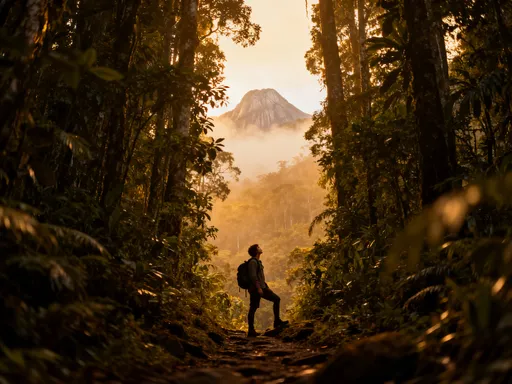
The ascent begins in the lowland rainforest, where humidity wraps around you like a second skin. Towering dipterocarp trees form a canopy so dense that sunlight filters through in scattered beams, illuminating moss-covered roots and the occasional flash of a sunbird’s wing. As elevation increases, the air cools, and the vegetation changes. Rhododendrons bloom in bursts of crimson and pink, while pitcher plants—some large enough to hold a cup of tea—cling to the damp soil, trapping insects in their slick, nectar-lined traps.
One of the most astonishing aspects of Kinabalu is its botanical wealth. Over 5,000 plant species call this mountain home, including 1,000 types of orchids—many found nowhere else on Earth. The ghost orchid, pale and delicate, seems to float in the mist. The Kinabalu pitcher plant, named after the mountain itself, is a marvel of evolution, capable of digesting small rodents that fall into its depths. These are not just curiosities; they are reminders of how life adapts in isolation, thriving in conditions that would challenge most species.
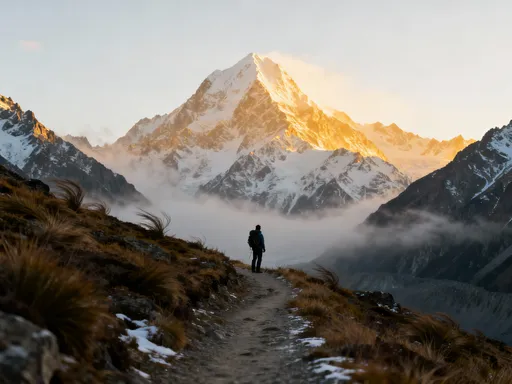
Hiking Kinabalu requires preparation and respect. Permits are limited, and all climbers must be accompanied by certified guides. This controlled access is not a barrier—it’s a safeguard. The trails are well-maintained but never easy. The final push to Low’s Peak, often beginning before midnight, tests endurance and mental focus. But when dawn breaks over the South China Sea, painting the sky in hues of rose and gold, the exhaustion melts into awe. In that moment, standing above the clouds, you understand why this mountain is sacred to the Kadazan-Dusun people. It is not just a summit. It is a threshold.
The Heart of the Jungle: Exploring Danum Valley
If Mount Kinabalu is the crown of Sabah’s wilderness, then Danum Valley is its beating heart. Spanning over 438 square kilometers, this protected lowland rainforest is estimated to be over 130 million years old—older than the Amazon. It is one of the most intact ecosystems in Southeast Asia, a sanctuary where nature operates without interference. There are no souvenir shops here. No loudspeakers. No paved roads. Just silence, depth, and the constant hum of life.
Staying in one of the research-based eco-lodges within the valley, visitors gain rare access to a world few ever witness. The days unfold slowly. Mornings begin with guided walks along forest trails, where every step reveals something new—a spider web glistening with dew, a tree frog clinging to a leaf, the distant call of a Bornean gibbon echoing through the canopy. But it is at night that Danum Valley truly comes alive. Night walks, led by expert rangers, transform the forest into a theater of shadows and sound. Eyes gleam from the underbrush—sometimes a civet, sometimes a slow loris, its large eyes reflecting the beam of a flashlight like tiny moons.
The wildlife here is extraordinary. Proboscis monkeys, with their distinctive long noses and potbellies, leap between riverine trees, their red fur glowing in the late afternoon light. Bornean orangutans, though elusive, leave signs of their presence—nests woven high in the treetops, or the rustle of branches as they move through the canopy. Birdwatchers may spot the rhinoceros hornbill, its massive yellow casque rising like a crown above its beak, or the rare Bulwer’s pheasant, strutting through the leaf litter with metallic blue plumage.
Perhaps the most thrilling possibility—though rarely confirmed—is the clouded leopard. Smaller than its mainland cousins but perfectly adapted to arboreal life, this elusive cat moves like a ghost through the trees. Seeing one is a matter of luck and patience. But even without a sighting, knowing it’s out there—the apex predator of an untouched food chain—adds a quiet intensity to every step. Danum Valley doesn’t need to dazzle with spectacle. Its power lies in authenticity. Here, nature is not performing. It is simply being.
Kinabatangan River: Where Wildlife Comes to Life
The Kinabatangan River, winding through the eastern lowlands of Sabah, is one of Borneo’s most vital wildlife corridors. Fed by seasonal rains and surrounded by a mosaic of floodplain forests, oxbow lakes, and palm swamps, this river sustains some of the island’s most endangered species. A sunrise boat cruise along its meandering course is not just a tour—it’s a front-row seat to the daily rhythm of wild life.
As the first light touches the water, the forest stirs. Crocodiles, some nearly four meters long, bask on muddy banks, their armored backs glistening. Long-tailed macaques chatter in the trees, tossing half-eaten fruit to the river below. A family of otters slices through the current, their sleek bodies moving in perfect unison. And then, the moment many come for: the pygmy elephants. Smaller and gentler than their mainland relatives, these rare pachyderms emerge from the jungle at dawn, crossing the river in single file, their calves staying close to their mothers’ sides.
The riverbanks are also prime habitat for proboscis monkeys. Often seen in large troops, they leap from tree to tree with surprising agility, their large noses bobbing comically as they move. At dusk, they gather in riverside trees to sleep, their silhouettes stark against the orange sky. Birdlife is equally rich. Kingfishers dart over the water, while storks and egrets stalk the shallows. And high above, the rhinoceros hornbill soars, its wings beating slowly, deliberately, like a sentinel of the forest.
What makes the Kinabatangan experience truly meaningful is the role of local communities. Many of the eco-lodges along the river are community-owned or operate under conservation partnerships. Rangers are often locals trained in wildlife monitoring and sustainable tourism. This model ensures that conservation benefits people as well as animals. When you take a boat ride, you’re not just observing nature—you’re supporting its protection. For travelers seeking purpose in their journeys, this connection between people and place is deeply satisfying.
Hidden Highlands: The Quiet Beauty of Kundasang
After the humidity of the jungle and the intensity of the river, the highlands of Kundasang offer a gentle reprieve. Nestled in the Crocker Range at about 1,200 meters above sea level, this region enjoys cooler temperatures, fresh air, and sweeping views of terraced farms and misty valleys. It is a place of quiet beauty—less dramatic than Kinabalu, but no less moving.
Kundasang is best known for its agriculture. Small family farms grow temperate vegetables like cabbage, carrots, and lettuce—crops that wouldn’t survive in Malaysia’s lowland heat. Flower gardens bloom with hydrangeas, roses, and chrysanthemums, their colors vivid against the green hills. These farms are not just productive; they are sustainable. Many use organic methods, composting waste and rotating crops to maintain soil health. Visiting a farm stall, you can taste the difference—crisp lettuce, sweet corn, and strawberries with real flavor.
For those who love to walk, Kundasang offers gentle trails that lead to hidden waterfalls, hot springs, and panoramic lookouts. One such path winds through a pine forest before opening onto a secluded pool fed by a natural spring. The water is warm, almost therapeutic, and the surrounding silence is broken only by the sound of falling drops. These are not marked tourist spots. They are discovered through local knowledge, shared with care.
What stands out in Kundasang is the balance between tourism and tradition. Homestays allow visitors to experience rural life firsthand—sharing meals with families, learning simple farming tasks, or simply sitting on a porch as the evening fog rolls in. There’s no performance, no staged folklore. Just real life, unfolding at its own pace. For women who have spent years managing households and schedules, this slow, intentional way of living can feel like a quiet revelation.
Beyond the Brochure: Finding Authentic Connection in Remote Villages
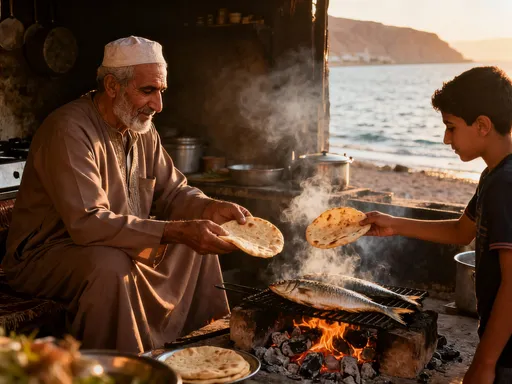
One of the most profound moments of my journey came not in a national park or on a famous trail, but in a small village near the Crocker Range. Reached by a narrow road that turned to gravel, then to dirt, the village had no streetlights, no convenience stores, and no Wi-Fi. What it had was warmth. Families welcomed us not as tourists, but as guests. We sat on woven mats, shared a meal of grilled fish, rice, and jungle greens, and listened to stories told in a mix of Malay and local dialect.
The visit was not arranged for show. There were no dances, no souvenir sales. Instead, we joined in simple tasks—helping to harvest vegetables, carrying water from a spring, feeding chickens. These acts, small as they seemed, created a bond far deeper than any photo opportunity. One elder woman, her hands rough from years of work, showed me how to wrap a traditional leaf packet for steaming food. Her patience, her quiet pride in sharing this knowledge, left me humbled.
What struck me most was how closely the villagers’ lives are tied to the land. They don’t see the forest as a resource to exploit, but as a provider to respect. They know which plants heal, which trees signal rain, and which animals mark the seasons. Their conservation ethic isn’t taught in classrooms—it’s lived. When they speak of protecting the forest, it’s not out of ideology, but out of necessity and gratitude.
For travelers, especially women seeking meaning beyond sightseeing, these moments of connection are transformative. They remind us that sustainability isn’t just about carbon footprints or plastic bans—it’s about relationships. When we travel with humility, when we listen more than we speak, we begin to see that conservation is not a distant cause. It is a shared responsibility, rooted in daily choices and mutual respect.
Why Sabah Changes How You See Nature
By the end of my journey, I realized that Sabah had not just shown me beautiful places—it had changed the way I experience them. I moved slower. I noticed more. I listened. The constant buzz of my daily life—the emails, the chores, the endless to-do lists—had faded into the background, replaced by the rustle of leaves, the call of birds, the rhythm of my own breath.
True discovery, I learned, doesn’t come from checking off landmarks. It comes from presence. It comes from sitting quietly by a river and watching an otter play. From waking before dawn to hear the forest wake up. From standing at the edge of a valley and feeling small, not in a way that diminishes, but in a way that expands your sense of belonging.
Sabah’s wild spaces are not just scenic backdrops. They are living, breathing systems that have evolved over millions of years. They remind us that humans are not the center of the world, but part of a much larger story. And in that realization lies a kind of freedom—the freedom to let go of control, to embrace wonder, to simply be.
For women who have spent years caretaking, organizing, and giving, this kind of experience is not a luxury. It is a necessity. Nature, in its quiet wisdom, offers restoration without demanding anything in return. It asks only that we pay attention. And when we do, we often find that the journey inward begins with a step into the wild.
Moreover, the conservation efforts visible throughout Sabah—guided trails, community-led tourism, research stations—show that protecting nature is not about locking it away. It’s about finding ways to coexist. It’s about ensuring that future generations can also stand beneath a canopy of ancient trees and feel the same awe. Traveling responsibly isn’t just ethical—it’s hopeful. It says that change is possible, one mindful choice at a time.
In a world that often feels fractured and fast, Sabah offers a different pace, a different possibility. It invites us to slow down, to look closely, to reconnect—not just with nature, but with ourselves. And in that reconnection lies the deepest kind of travel: the kind that changes how you see the world, and your place within it.
Sabah doesn’t shout for attention—it whispers. Its power lies not in spectacle alone, but in the way it makes you feel small in the best possible way. These natural areas aren’t just destinations; they’re reminders of what Earth once was, and still can be. By choosing to explore them with care, we don’t just find new places—we rediscover our place within nature. The real journey begins when the map ends.