You Won’t Believe These Hidden Photo Spots in Penang
Penang isn’t just about street food and temples—it’s a visual playground waiting to be captured. Wandering its lanes, I stumbled upon theme-driven corners where every wall, mural, and courtyard tells a story. From colonial charm to vibrant street art districts, these spots aren’t just pretty—they’re alive with culture. If you're chasing photos that stand out, Penang’s themed zones deliver authenticity and wow factor in one frame. The island offers a rare blend of historical depth and artistic vibrancy, where each neighborhood unfolds like a curated chapter in a visual novel. Whether you're drawn to bold colors, quiet reflections, or architectural grandeur, Penang rewards the mindful traveler with moments that feel both timeless and immediate. This is not just a destination for photographs—it’s a destination shaped by them.
George Town’s Street Art Scene: Where Murals Come Alive
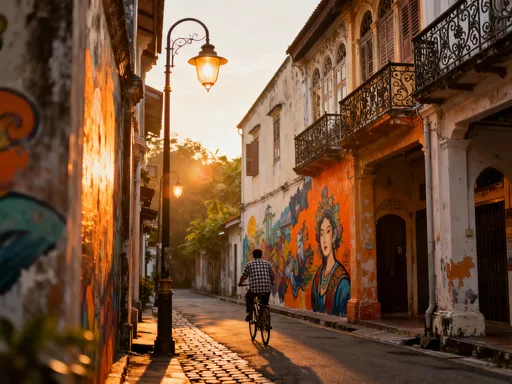
George Town’s transformation into an open-air art gallery is one of Southeast Asia’s most inspiring urban revivals. What was once a collection of aging shophouses has become a canvas for storytelling through paint, steel, and imagination. At the heart of this movement stands the work of Lithuanian artist Ernest Zacharevic, whose 2012 series of street installations sparked a cultural shift. His mural Children on a Bicycle, located on Armenian Street, remains one of the most photographed spots on the island. The playful fusion of real bicycle parts with painted figures creates a whimsical illusion—children mid-pedal, frozen in joyful motion. It’s not just art; it’s an invitation to interact, to sit beside them, and become part of the narrative.
Another iconic piece, Reaching Up, depicts two children climbing a wall, their hands stretching toward the sky. This mural, like many others, carries subtle social commentary—about aspiration, youth, and the limits we imagine for ourselves. These works are not isolated; they’re part of a broader network of over 50 murals scattered throughout George Town’s UNESCO World Heritage zone. While some are widely shared on social media, others remain hidden in narrow passageways, known only to locals or seasoned explorers. One such gem is Boy on a Motorbike, tucked behind a quiet alley near Chulia Street, where a painted youth grips invisible handlebars with wind-swept hair—a tribute to childhood freedom.
For photographers, the magic lies not only in the murals themselves but in how light and timing shape the image. Early morning, between 7:00 and 8:30 a.m., offers soft, golden illumination that enhances textures without harsh shadows. Midday sun flattens colors and creates glare, especially on reflective surfaces. Shooting from a low angle can emphasize perspective, making the murals appear larger than life. Using a wide-angle lens helps capture both the artwork and its urban context—peeling paint, rusted railings, and weathered bricks that add authenticity. Some murals, like Rain Children, are best seen after a light shower when the wet ground mirrors the figures, doubling their visual impact.
But beyond technique, the key is patience. Tourists flock to these sites, often clustering around the most famous pieces. Waiting just 10 to 15 minutes after a group leaves can yield a clean shot. Alternatively, visiting on weekdays reduces foot traffic significantly. Local guides occasionally lead themed photography walks, revealing lesser-known works like Rock Climber or See-Saw Kids, which are equally compelling but rarely crowded. These murals do more than decorate walls—they transform George Town into a living museum, where every corner invites a pause, a frame, and a story.
The Charm of Colonial Architecture: A Black-and-White Elegance
Penang’s colonial legacy is etched into its skyline, where 19th-century British architecture stands in dignified contrast to modern development. Buildings like the City Hall, completed in 1903, showcase neoclassical design with symmetrical facades, arched colonnades, and grand staircases that speak of imperial grandeur. The Eastern & Oriental Hotel, one of Asia’s oldest luxury hotels, retains its old-world charm with teak verandas, ceiling fans, and white-linen verve. These structures are not relics; they are fully functional spaces where history and hospitality coexist. For photographers, they offer a timeless aesthetic—clean lines, balanced proportions, and rich textures that thrive in black-and-white photography.
Fort Cornwallis, the island’s oldest British fort, presents another dimension of this architectural heritage. Though modest in size, its stone ramparts and cannon emplacements provide dramatic foregrounds for wide-angle shots. The interplay of light and shadow here is particularly striking at mid-morning, when sunlight cuts across weathered masonry, accentuating grooves and imperfections. Using a polarizing filter can reduce glare on stone surfaces while deepening the contrast between sky and structure. Photographers often overlook the smaller details—iron door hinges, brass nameplates, or the curve of a wrought-iron balcony—which can make for compelling close-ups.
One of the best vantage points for capturing colonial symmetry is from the steps of the Penang State Museum, where a clear view of the City Hall’s facade allows for perfectly centered compositions. Arriving early ensures minimal pedestrian interference. For those seeking elevated perspectives, the rooftop café of the Areca Hotel offers an unobstructed panorama of surrounding heritage buildings, especially effective during the golden hour when warm light bathes the stucco walls in a honeyed glow. Reflections in puddles after rain can also double the visual impact, creating mirror images that enhance depth and balance.
Black-and-white photography, in particular, elevates these scenes by stripping away distractions and emphasizing form. Converting images in post-processing allows for greater control over contrast and tonal range. However, shooting in color first preserves flexibility. The key is to look for patterns—repeating arches, rows of shuttered windows, or rhythmic columns—that create visual rhythm. These architectural elements don’t just document the past; they offer a masterclass in composition for anyone with a lens.
Kapitan Keling Mosque & Heritage Row: A Cultural Mosaic
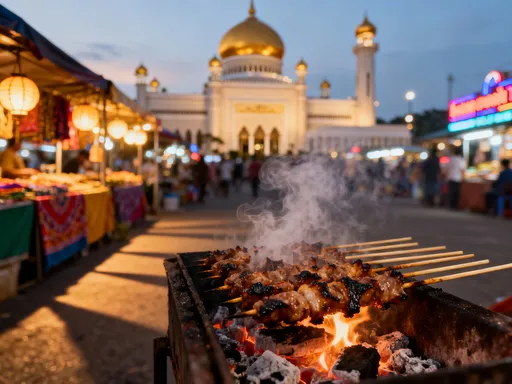
One of Penang’s most powerful visual narratives unfolds along Pitt Street, affectionately known as “Heritage Row.” Here, places of worship from four major religions stand within a few hundred meters, forming a rare testament to peaceful coexistence. The Kapitan Keling Mosque, with its grand Mughal-style dome and minarets, sits just steps from the Sri Mahamariamman Temple, its gopuram tower bursting with colorful deities. Nearby, the Anglican St. George’s Church rises with Gothic spires, while the Khoo Kongsi clan house displays intricate Chinese carvings and tiled roofs. This proximity is not accidental—it reflects Penang’s multicultural soul, where diversity is not just tolerated but celebrated in stone, wood, and paint.
Photographing this area requires both technical skill and cultural sensitivity. The Kapitan Keling Mosque, established in 1801, welcomes visitors outside prayer times, but modest dress is required—shoulders and knees covered, shoes removed. Early mornings, between 8:00 and 9:30 a.m., offer soft light and fewer worshippers, ideal for capturing the full façade without interruption. The golden dome glows under angled sunlight, while the arched entranceway creates natural framing. Using a wide-angle lens helps include both the mosque and its surrounding urban context, showing how it fits within the neighborhood’s fabric.
The Sri Mahamariamman Temple, the oldest Hindu temple in Penang, dazzles with its ornate sculptures and vibrant colors. The best time to photograph is late afternoon, when the setting sun illuminates the gopuram, making the painted figures appear almost luminous. Avoid using flash inside sacred spaces, as it can be disruptive. Instead, increase ISO slightly and use a tripod or rest your camera on a stable surface. Capturing devotees in prayer adds human warmth, but always ask permission before photographing individuals. Some of the most powerful images are those that show quiet moments—a woman lighting a lamp, a priest arranging flowers—small rituals that convey deep devotion.
St. George’s Church, built in 1818, offers a quieter, more solemn atmosphere. Its white façade and tall windows create a sense of calm, ideal for minimalist compositions. The surrounding banyan trees add natural framing, their aerial roots draping like curtains. Early morning fog sometimes lingers, lending a dreamlike quality to shots. Meanwhile, the Khoo Kongsi, though not a place of worship, functions as a cultural and ancestral hall. Its courtyard, with its lotus pond and carved granite pillars, is a photographer’s delight. The ceiling murals, depicting mythological scenes, require a tilt-up angle to capture fully. This area is best explored slowly, allowing time to observe and wait for the right moment—a child running across the courtyard, a vendor setting up a stall—elements that bring static architecture to life.
Armenian Street & the Heart of UNESCO Zone: Quirky and Colorful
Armenian Street is the pulsing heart of George Town’s creative revival. Once a quiet lane, it has evolved into a hub of boutique galleries, indie bookshops, and artisan cafés, all housed in restored shophouses painted in soft pastels—mint green, powder blue, blush pink. The street’s charm lies in its blend of old and new: a 19th-century facade now shelters a modern coffee roastery; a vintage barber shop operates beside a contemporary art studio. This fusion makes it a prime location for lifestyle photography, where the focus shifts from monuments to moments.
One of the most photographed corners is the corner of Armenian and Cannon Streets, where a cluster of colorful buildings creates a rainbow-like effect. Shooting from the opposite sidewalk allows for a full frontal view, especially effective in the late afternoon when shadows stretch diagonally across the pavement. The street’s low height—rarely more than three stories—keeps the scale human and intimate. Photographers often use shallow depth of field to isolate a single door, a potted plant, or a hand-painted sign, turning small details into visual poetry.
Daily life unfolds openly here, offering rich storytelling opportunities. A barber leans on his chair, reading the paper; a bookseller arranges vintage titles in a glass case; a street musician strums a guitar under a canopy. These scenes are not staged—they are the rhythm of the street. To capture them authentically, blend in. Walk slowly, observe, and wait for natural interactions. A wide-angle lens helps include both subject and environment, showing how people inhabit these historic spaces. Avoid intrusive zooming or sudden movements that might disturb the scene.
Behind many of these shophouses lie hidden courtyards—once used for ventilation and family gatherings, now repurposed as café seating or art installations. Gaining access often requires purchasing a drink, but the reward is worth it. These inner spaces, drenched in filtered light and greenery, offer a sense of discovery. One such courtyard, behind a heritage bookstore, features a vertical garden and a small water feature—perfect for tranquil, meditative shots. Armenian Street is not just about grand vistas; it’s about the quiet beauty of everyday life unfolding in a historic setting.
Penang Hill’s Vintage Railway and Panoramic Vistas
Rising 735 meters above sea level, Penang Hill offers one of the island’s most breathtaking photographic experiences. The journey begins at the base station of the funicular railway, a charming colonial-era structure with timber beams and vintage ticket windows. Opened in 1923, the railway is one of the oldest in Southeast Asia, and its nostalgic appeal is undeniable. Photographing the waiting area—the wooden benches, the clock on the wall, the steam-style locomotive design—evokes a sense of time travel. Early morning rides, starting at 6:30 a.m., are less crowded and often shrouded in mist, adding a mystical quality to the ascent.
The 2-kilometer climb winds through dense rainforest, offering fleeting glimpses of ferns, orchids, and occasional wildlife. Wide windows on the train allow for steady shots of the jungle canopy, especially effective when raindrops streak the glass, creating a natural blur effect. Upon reaching the summit, the view opens dramatically—George Town sprawls below, a patchwork of red roofs, green trees, and the shimmering strait. The best panoramic vantage point is the viewing platform near the Habitat Conservation Centre, where unobstructed sightlines stretch to the mainland.
Golden hour, just after sunrise or before sunset, transforms the landscape. At dawn, the city lights fade as daylight creeps in, revealing contours and textures. At dusk, the skyline lights up, creating a sparkling tapestry. A tripod is essential for long exposures during low light, especially when capturing the city’s glow. Even on cloudy days, the summit offers moody, atmospheric shots—fog rolling over treetops, silhouetted antennas, and blurred movement of visitors in the distance.
However, the hill’s microclimate can challenge equipment. Humidity levels often exceed 80%, and sudden mist can fog lenses. Keeping a microfiber cloth handy and storing gear in sealed bags when not in use helps prevent damage. Avoid changing lenses in open areas to reduce dust and moisture exposure. Despite these conditions, the elevation provides a unique advantage: the ability to layer foreground, midground, and background. A shot might include a close-up of a pitcher plant in the foreground, a canopy walkway in the midground, and the city skyline in the distance—a single frame with depth, texture, and scale.
The Clan Jetties: Life on Water, a Unique Visual Story
Along Weld Quay, six clan jetties stretch into the sea, each named after a Chinese family—Lee, Chew, Yeoh, and others. Built by 19th-century immigrants, these stilt villages float above the water, connected by wooden walkways that creak underfoot. While modernization has altered parts of the coastline, the jetties remain inhabited, preserving a way of life that is both resilient and photogenic. The Chew Jetty, the most visited, offers the best access and the richest visual narrative—homes painted in bright blues and reds, laundry hanging from bamboo poles, fishing nets drying in the sun.
Photographing here requires respect. These are not tourist attractions; they are homes. Always greet residents with a smile and ask permission before taking portraits. Many elders, accustomed to visitors, will pose willingly if approached politely. Early morning, between 7:00 and 9:00 a.m., is ideal—families prepare breakfast, children head to school, and fishermen mend nets. The low angle of sunlight casts long reflections on the water, doubling the visual impact. A polarizing filter can reduce glare and enhance color saturation, especially on painted walls.
Use a wide-angle lens to capture both the structure and its context—the wooden stilts, the rippling water, the skyline in the distance. Low-angle shots from the walkway emphasize the height of the houses and the depth of the water below. Reflections are a powerful tool; a still morning can turn the entire jetty into a mirror image, creating surreal symmetry. Some of the most compelling shots focus on details: a child’s toy boat, a temple altar inside a home, a cat napping on a windowsill—small moments that reveal daily life.
While the Chew Jetty is the most accessible, the quieter Lee and Yeoh Jetties offer more intimate scenes with fewer tourists. These areas feel more lived-in, less curated. Visiting midweek ensures greater authenticity. The jetties are not just about aesthetics; they are a living archive of Penang’s maritime history. Each photograph taken here carries the weight of generations—of migration, adaptation, and community.
Botanical Gardens & Escape to Green: Nature as a Photo Sanctuary
Just a short drive from the city center, the Penang Botanic Gardens offer a serene retreat for nature photographers. Established in 1884, the 30-hectare site follows the contours of a valley, with winding trails, cascading streams, and a rich diversity of flora. Unlike manicured parks, this garden feels wild and untamed—ferns unfurl in shaded nooks, creepers drape from ancient trees, and birdsong fills the air. The absence of crowds makes it ideal for contemplative photography, where the focus shifts from people to plants, light, and texture.
One of the most photographed subjects is the Cannonball Tree, located near the orchid house. Its massive trunk produces large, spherical fruits that hang like cannonballs, giving the tree its name. During blooming season, fragrant pink and red flowers emerge directly from the bark, creating a striking contrast against the gray trunk. Early morning light filters through the canopy, casting dappled patterns on the forest floor—perfect for soft, diffused images. A macro lens reveals the intricate structure of the flowers, while a wide-angle captures the tree in its lush surroundings.
The canopy walkway, suspended 20 meters above ground, offers a rare perspective—shooting downward through layers of foliage, or outward toward the treetops. On misty mornings, the walkway disappears into the clouds, creating an ethereal effect. The sound of the waterfall at the garden’s lower end adds a sensory layer; long exposures can blur the water into silky ribbons. Using a neutral density filter allows for slower shutter speeds even in daylight, enhancing the dreamlike quality.
For those seeking vibrant colors, the orchid and fern houses are treasure troves. Glass enclosures protect rare species, their leaves glistening with moisture. Backlighting enhances translucency, making leaves appear almost glowing. Avoid using flash, as it creates harsh reflections on glass. Instead, increase ISO and stabilize the camera. The gardens are open from 5:00 a.m. to 7:00 p.m., but the best light arrives between 6:30 and 8:30 a.m., when dew still clings to petals and spiderwebs sparkle like silver threads. This is not a place for hurried snapshots; it’s a sanctuary for slow, intentional photography—a reminder that beauty thrives in stillness.
Penang’s magic lies in its layers—history, culture, color, and contrast—all within walking distance. These themed photo zones don’t just offer great pictures; they invite deeper connection. Whether you’re a casual snapper or serious shooter, every corner holds a frame worth remembering. Pack your lens, respect the soul of the streets, and let Penang tell its story through your eyes. The island doesn’t need staging or filters; it reveals itself to those who walk with patience, see with care, and photograph with humility. In Penang, every image is a dialogue between observer and observed—a moment of mutual recognition. And in that exchange, something lasting is created: not just a photograph, but a memory etched in light and time.