You Gotta Taste This: How Brunei’s City Bites Stole My Heart
Wandering through Bandar Seri Begawan, I didn’t expect much—honestly, I was just passing through. But then the smells hit me: sizzling satay, sweet coconut rice, smoky grilled meats. The city’s quiet skyline hides a flavor explosion. From roadside carts to bustling night markets, every bite told a story. This isn’t just food—it’s the soul of Brunei, served hot and fresh. Let me take you where the cityscape meets the spice.
First Impressions: A Quiet Capital with a Spicy Secret
Bandar Seri Begawan greets visitors with a serene dignity. Wide boulevards lined with palm trees, immaculate public spaces, and the golden dome of the Omar Ali Saifuddien Mosque rising above the Brunei River—all speak of a city that values order and tradition. At first glance, it might seem reserved, even quiet to the point of stillness. Tourists often pass through quickly, assuming there’s little to explore beyond the postcard views. But those who linger soon discover a different rhythm—one measured not by traffic or crowds, but by the sizzle of skewers on open flames and the rhythmic pounding of spices in wooden mortars.
The true character of Brunei’s capital reveals itself not in its architecture alone, but in its aromas. Within minutes of stepping off the main roads and into the neighborhoods, the air changes. It thickens with the scent of charred meat, toasted coconut, and slow-simmered curries. These are not the smells of fine dining restaurants hidden behind glass doors, but of life unfolding in the open—on sidewalks, under tarpaulin shelters, in the back of pickup trucks turned mobile kitchens. This is where Brunei’s heart beats strongest: in the communal joy of shared meals and the pride of culinary heritage.
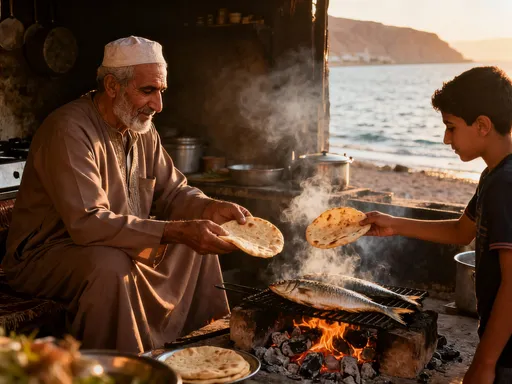
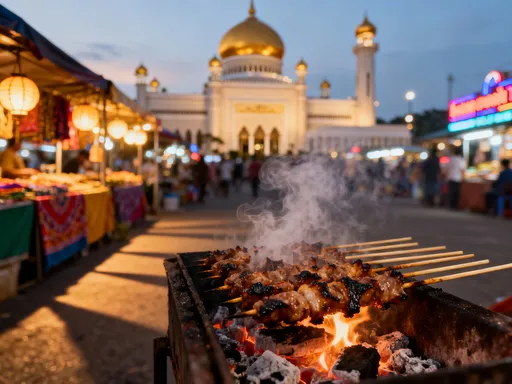
For many first-time visitors, including myself, the contrast is striking. The city’s polished exterior gives no hint of the sensory feast waiting just beneath the surface. I arrived with modest expectations, thinking I’d grab a quick meal before moving on. But within an hour, I was seated on a plastic stool at a roadside stall, watching a vendor deftly flip skewers of sate bandar over glowing charcoal. The marinade—rich with turmeric, garlic, and a secret blend of spices—dripped onto the fire, sending up fragrant plumes that wrapped around me like an invitation. That moment shifted my entire perspective. Food here isn’t an afterthought; it’s the lens through which the city should be seen.
What makes this culinary culture so powerful is its authenticity. There are no performative 'food experiences' designed for Instagram. Instead, every dish serves a purpose—nourishment, celebration, connection. Whether it’s a fisherman eating grilled mackerel by the river at dawn or a family sharing a late-night bowl of noodle soup after prayers, food is woven into the daily fabric of life. To understand Brunei, one must taste it—not just sample it, but engage with it, ask questions, and accept the warm invitations that inevitably follow.
Morning Flavors: Where Locals Start Their Day
The day in Bandar Seri Begawan begins not with coffee chains or pastries, but with the quiet hum of breakfast traditions that have endured for generations. Long before the sun climbs high, markets near the riverbanks and neighborhood centers come alive with steam and chatter. Vendors arrange banana leaves, stack bamboo steamers, and pour dark, syrupy kopi into thick porcelain cups. This is the uncelebrated magic of Brunei’s mornings—a time when flavor, routine, and community intersect in the most ordinary yet profound ways.
One of the most beloved breakfast staples is nasi lemak, a dish that, while found across Southeast Asia, has its own distinct Bruneian character. Here, the coconut rice is subtly fragrant, not overly rich, and wrapped neatly in banana leaf—a biodegradable package that imparts a faint herbal note to the grains. Inside, you’ll find a small piece of fried anchovy, a sliver of cucumber, a hard-boiled egg, and a dollop of sambal that brings gentle heat rather than assault. It’s a balanced, comforting start to the day, often eaten standing up or on a park bench with a cup of local coffee in hand.
Equally cherished are the kueh—colorful, bite-sized steamed cakes made from rice flour, coconut milk, and palm sugar. Arranged in rows on banana leaves, they come in jewel tones: green from pandan, pink from natural fruit extracts, yellow from turmeric. Their textures vary from jelly-soft to slightly chewy, and their sweetness is never cloying. Grandmothers sell them from folding tables outside mosques, and office workers buy them in small bundles, knowing each piece carries the care of someone’s family recipe. Eating kueh in the morning feels like participating in a quiet ritual, one that honors patience, craftsmanship, and the value of small pleasures.
What stands out most about Brunei’s morning food scene is its lack of pretense. There are no ‘instagrammable’ setups or inflated prices for tourists. These are meals made for locals, by locals. The vendors know their regulars by name, and newcomers are welcomed with a nod and a warm smile. It’s common to see children handing over coins for a cup of kopi tarik, the local pulled tea, watching in fascination as the server pours the dark liquid back and forth between two containers to create a frothy top. This simplicity is not a sign of underdevelopment, but of confidence—a culture that doesn’t need to perform to prove its worth.
Street Food Trails: Following the Smoke and Aroma
If Brunei’s mornings are gentle, its afternoons and evenings are alive with fire and flavor. As the sun begins to dip, the city’s street food culture comes into full swing. The best way to experience it is simply to follow the smoke. Trails of gray wisps rise from grills tucked into alleyways, parking lots, and roadside clearings, each one marking a hub of culinary activity. These are not isolated vendors, but clusters of specialists—each with their own domain, their own loyal following.
One cannot talk about Bruneian street food without mentioning sate bandar, the national version of satay that sets itself apart from its neighbors. Unlike the peanut-heavy satays of Malaysia or Indonesia, Brunei’s version uses a marinade of ground coriander, cumin, lemongrass, and a touch of brown sugar, resulting in a smoky, aromatic flavor that clings to the tender cubes of beef or chicken. The skewers are grilled over coconut husk charcoal, which imparts a subtle sweetness, and served with a side of spicy dipping sauce made from chilies, lime, and shallots. It’s a dish that demands to be eaten slowly, fingers included, savoring each bite as it tells a story of spice routes and local adaptation.
Another standout is grilled prawn, often caught fresh from the Brunei Bay and sold the same day. Vendors split the shell open, brush the meat with a garlic-chili glaze, and grill it until the edges curl and char. The result is juicy, briny, and deeply satisfying—best enjoyed with a wedge of lime and a cold drink. Equally popular are spiced noodle dishes, such as mi goreng Brunei, where yellow noodles are stir-fried with vegetables, egg, and a touch of soy sauce, then finished with a sprinkle of fried shallots and a wedge of lime. It’s humble food, but executed with care and consistency.
One concern many travelers have is hygiene, but Brunei’s street food scene is notably clean and well-regulated. Vendors are required to maintain sanitary practices, and most operate under temporary licenses that ensure accountability. Handwashing stations are common, and many stalls use gloves or tongs when handling food. The high turnover of ingredients means everything is fresh, and the constant flow of local customers is itself a sign of trust. Eating on the street here is not a dare—it’s a normal, safe, and deeply rewarding part of daily life.
Hidden Eateries: Beyond the Tourist Radar
While the markets and roadside stalls offer a vibrant introduction to Brunei’s food culture, the most memorable experiences often happen off the map. In quiet residential neighborhoods, far from the city center, family-run warungs operate with no signage, no menus, and no need for advertising. These are not businesses in the commercial sense, but extensions of the home kitchen—places where recipes are passed down through generations and meals are made with love, not profit in mind.
I was fortunate enough to be invited into one such home by a local guide who knew the family. We removed our shoes at the door, exchanged polite greetings, and were ushered into a modest dining room where a low table was already set with small bowls and plates. The centerpiece was a bowl of ambuyat, a traditional Bruneian dish made from sago starch cooked into a sticky, glue-like consistency. It looks intimidating at first—pale and gelatinous—but its role is not to be eaten alone, but to be dipped into flavorful side dishes known as cacah.
To eat ambuyat, you take a small portion on a fork, twirl it around a bamboo stick called a chandas, and then dip it into a cacah—perhaps a spicy shrimp paste, a tangy tamarind broth, or a rich curry made with river fish. The texture is unique: smooth, stretchy, and surprisingly neutral, making it the perfect vehicle for bold flavors. What made the experience unforgettable was not just the food, but the warmth of the family. They laughed as I struggled with the chandas, patiently showing me the proper technique. Their hospitality was effortless, rooted in a cultural value of generosity and respect for guests.
Such moments are rare for tourists, but they highlight an essential truth: in Brunei, food is more than sustenance—it’s a bridge. It breaks down barriers, invites conversation, and fosters connection. These hidden eateries may never appear in guidebooks, but they are where the soul of the culture lives. They remind us that the best meals are not always the most elaborate, but the ones shared with people who welcome you as one of their own.
City Views & Bites: Dining with a Skyline Backdrop
As Brunei modernizes, its food scene is evolving in harmony with its urban landscape. Along the Brunei River, where the illuminated dome of the Omar Ali Saifuddien Mosque reflects on the water at night, a new generation of dining spots has emerged. These are not replacements for traditional food, but complements—places where the old and new coexist in elegant balance. Waterfront cafes and rooftop restaurants offer comfortable seating, cool breezes, and panoramic views, all while serving dishes deeply rooted in local tradition.
One evening, I dined at a riverside eatery that specialized in modern interpretations of Bruneian classics. The setting was serene: soft lighting, wooden decks, and the gentle lap of water against the shore. The menu featured grilled chicken with a sate-inspired glaze, coconut rice infused with pandan, and a refreshing salad of young mango and shredded coconut. It was familiar yet refined, a nod to heritage presented with contemporary care. As the sun set behind the mosque, turning the sky into streaks of orange and purple, I sipped on a drink made with local lime and honey, feeling the day’s heat melt away.
These spaces are particularly meaningful for families and older residents who appreciate comfort without sacrificing authenticity. They allow people to enjoy their culinary heritage in a relaxed environment, free from the dust and noise of street stalls. Yet the connection to tradition remains strong—chefs often source ingredients from the same markets that feed roadside vendors, and many dishes are prepared using time-honored methods. The evolution of Brunei’s dining culture is not about erasing the past, but expanding the ways in which it can be experienced.
What stands out is the respect for place. These restaurants don’t try to mimic Western trends or erase local identity. Instead, they enhance it, using architecture and ambiance to elevate the meal without overshadowing it. Dining here feels like participating in a quiet renaissance—one where Brunei’s calm exterior and rich inner life come together in perfect harmony.
Market Culture: The Heartbeat of Urban Brunei
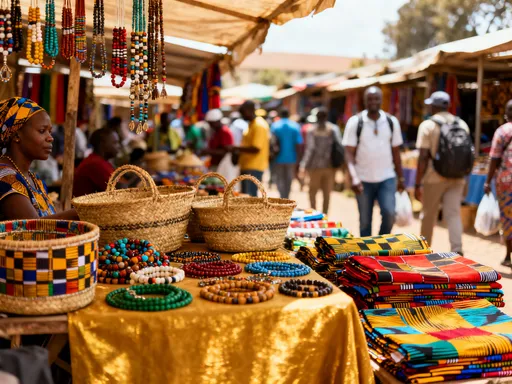
At the core of Brunei’s food culture lies its markets—vibrant, noisy, and full of life. Tamu Kianggeh, the most famous of them, opens early every morning and buzzes with activity until midday. Stalls overflow with fresh produce: rambutan with their spiky red shells, durian wrapped in netting, bunches of fragrant bananas, and baskets of jungle ferns used in traditional cooking. Fishmongers display silvery mackerel, plump prawns, and river eels, while spice vendors offer turmeric root, galangal, and dried chilies in woven baskets.
These markets are more than places to shop—they are social hubs where news is exchanged, recipes are shared, and community is built. Elderly women haggle gently over prices, mothers compare notes on the best fish for soup, and children run between stalls with sticky fingers from sampling fruit. The air is thick with conversation, the rustle of banana leaves, and the occasional call to prayer echoing in the distance. To walk through Tamu Kianggeh is to witness the living pulse of urban Brunei.
Crucially, these markets feed both homes and street vendors. The woman selling nasi lemak in the morning likely bought her rice, coconut, and chilies here. The man grilling sate bandar sources his spices from the same stalls that supply home cooks. This closed loop ensures freshness and supports local agriculture and small-scale producers. It also preserves culinary knowledge—when a vendor explains how to prepare a rare herb or recommends a particular fish for a festive dish, they are passing on more than a tip; they are safeguarding heritage.
In a world where supermarkets and global supply chains dominate, Brunei’s market culture stands as a testament to resilience and continuity. It proves that modernization does not require the loss of tradition. Instead, these markets show how the old and new can coexist, each enriching the other. For visitors, they offer a chance to see, touch, and taste the ingredients that make Bruneian cuisine so distinctive—a sensory education in the roots of flavor.
Practical Tips: Eating Like a Local Without Getting Lost
For travelers eager to explore Brunei’s food culture, a few practical tips can make the experience smoother and more rewarding. First, carry cash—most street vendors and small warungs do not accept cards. Small bills are especially useful, as change can be hard to come by in busy settings. While English is widely spoken, learning a few basic phrases in Malay can go a long way: 'Terima kasih' (thank you), 'Sedap!' (delicious), and 'Boleh cuba?' (can I try?) are simple but meaningful gestures of respect.
Timing matters. Many vendors set up early and sell out by midday, so arriving between 7:00 and 9:00 a.m. ensures the best selection. Similarly, night markets and roadside grills come alive in the evening, especially on weekends. Avoiding the midday heat not only makes walking more comfortable but also aligns with local rhythms—this is when most people rest, and many food stalls are closed.
When dining, observe local customs. It’s common to eat with your right hand, especially when enjoying dishes like ambuyat, but utensils are always available if preferred. Show appreciation by finishing your plate or saying 'sedap' with a smile—compliments are warmly received. And if you’re invited into a home, accept with gratitude; refusing can be seen as disrespectful.
Safety and cleanliness are generally excellent. Brunei has low crime rates, and food vendors adhere to health standards. Tap water is safe to drink, and public restrooms in markets and malls are well-maintained. For those with dietary restrictions, it’s wise to ask about ingredients, as many dishes contain shrimp paste or coconut milk. Overall, the food scene is accessible, welcoming, and deeply rewarding for those who approach it with curiosity and respect.
Conclusion: More Than a Meal—A City Served on a Plate
Brunei’s capital may appear quiet at first glance, but beneath its calm surface lies a world of flavor, warmth, and tradition. Every meal—from a humble banana-leaf packet of nasi lemak to a shared bowl of ambuyat in a family home—offers a window into the soul of the city. Food here is not just sustenance; it is memory, identity, and connection. It transforms a simple visit into a meaningful journey, one that lingers long after the last bite.
The harmony between Brunei’s serene exterior and its vibrant inner life is what makes it so special. In a world that often equates excitement with noise and speed, Brunei reminds us that depth can be found in stillness, and richness in simplicity. Its cuisine does not shout for attention—it invites you in, softly, patiently, with the promise of something real.
To travelers, especially those who value authenticity and cultural connection, I offer this: look beyond the skyline. Step off the main roads. Follow the smoke, the laughter, the scent of coconut and spice. Let your taste buds guide you. Because in Brunei, the truest way to know a city is not by seeing it, but by tasting it—one unforgettable bite at a time.