You Won’t Believe What Aarhus Hides in Plain Sight
Aarhus isn’t just Denmark’s second city—it’s a living gallery of architectural evolution. From Viking foundations to futuristic woodlands, every corner tells a design story. I walked its streets, traced its rooftops, and discovered how old meets bold in unexpected ways. This is more than sightseeing—it’s understanding how a city shapes its soul through bricks, glass, and green ambition. Let me take you behind the facades, where architecture doesn’t just stand—it speaks.
First Impressions: A City That Breathes Design
Aarhus greets visitors with a quiet confidence, a city that feels both accessible and intentional in its design. Unlike the ornate formality of Copenhagen, Aarhus offers a more human-scale experience, where architecture serves daily life rather than merely impressing the eye. The city center unfolds along pedestrian-friendly lanes, where cyclists glide past cafes with outdoor seating and public squares invite spontaneous gatherings. This seamless integration of space and structure creates an atmosphere of calm efficiency, where urban planning enhances rather than interrupts the rhythm of living.
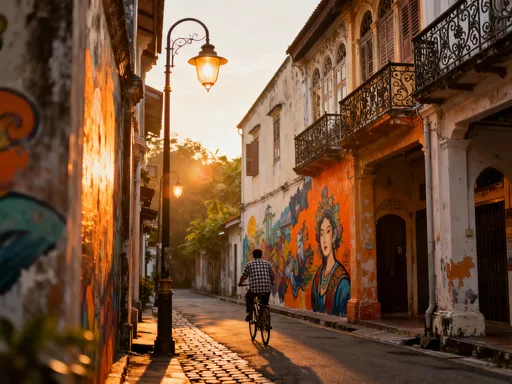
One of the most striking aspects of Aarhus is how it balances openness with intimacy. Wide boulevards give way to narrow cobbled streets, and modern glass buildings stand comfortably beside centuries-old facades. The city’s layout encourages exploration on foot, and every turn reveals a thoughtful detail—a sculpted bench, a sun-dappled courtyard, or a rooftop garden tucked between gables. Public spaces are not afterthoughts; they are central to the city’s identity. Places like Store Torv and Bispetorv serve as communal hearts, hosting markets, concerts, and seasonal events that draw residents together across generations.
The urban design philosophy here emphasizes connectivity. Aarhus has invested heavily in sustainable mobility, with an extensive network of bike paths, efficient public transit, and car-restricted zones that prioritize people over vehicles. This commitment to walkability enhances the appreciation of architecture, allowing visitors and locals alike to experience buildings not as isolated monuments but as parts of a living, breathing environment. The city’s compact size means that within a short stroll, one can move from medieval churches to cutting-edge civic buildings, each contributing to a layered narrative of cultural continuity and innovation.
Architectural harmony in Aarhus is not achieved through uniformity, but through dialogue. New constructions often echo traditional materials—red brick, timber, and slate—while reinterpreting them in contemporary forms. This subtle continuity allows the city to evolve without losing its character. For example, modern apartment buildings incorporate pitched roofs and vertical windows that reference historic Danish homes, creating visual cohesion across eras. It is this balance—between preservation and progress—that makes Aarhus a model of thoughtful urban development.
Dawn of Stone: Tracing Viking and Medieval Roots
The story of Aarhus begins over a thousand years ago, when Norse settlers established a small trading post along the Aarhus River. Though little remains of those earliest wooden structures, archaeological work has uncovered enough to reconstruct the architectural spirit of the Viking Age. At the Moesgaard Museum, just south of the city, visitors can walk through full-scale replicas of Viking longhouses—impressive timber-framed buildings with thatched roofs and central fire pits. These reconstructions offer a tangible sense of how early Scandinavians lived, worked, and gathered under one roof, their homes designed for both warmth and community.
What stands out in these early designs is their practicality. Viking architecture was shaped by necessity—harsh winters, limited resources, and the need for defensive positioning. Yet within these constraints, there was also artistry. Carved doorposts, ornamental metalwork, and symbolic layouts reveal a culture that valued craftsmanship and spiritual meaning. The longhouse was more than shelter; it was a social and ceremonial space, where family, trade, and ritual coexisted. This integration of function and symbolism laid the foundation for Denmark’s architectural identity—a tradition that continues to value purposeful design.
As Christianity spread through Scandinavia in the 10th and 11th centuries, stone began to replace wood in sacred architecture. The oldest standing building in Aarhus, Aarhus Cathedral, dates back to the early 1200s and exemplifies Romanesque and later Gothic influences. Its thick stone walls, pointed arches, and towering spire reflect a shift toward permanence and vertical aspiration. The cathedral’s construction required immense effort and skill, with local limestone quarried and transported by hand. Inside, the play of light through stained glass and the acoustics of the vaulted nave create an atmosphere of reverence, demonstrating how architecture can shape emotional and spiritual experience.
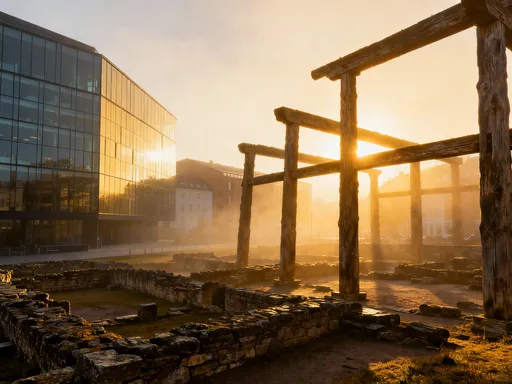
While the cathedral is the most visible medieval remnant, smaller traces of the past appear throughout the city. Excavations beneath modern streets have revealed foundations of ancient homes, workshops, and even early fortifications. These fragments, though not always on public display, inform the way Aarhus understands its own history. Museums like Den Gamle By, an open-air historical town that includes reconstructed medieval and Viking-era buildings, allow visitors to step directly into the past. Here, the architectural language of early Denmark—modest in scale but rich in detail—comes alive, offering insight into how communities once organized their lives around shared spaces and seasonal rhythms.
Red Tile Revival: The Charm of Historic Townhouses
Wandering through Aarhus’s Latin Quarter, one is immediately struck by the harmonious streetscape of red-tiled roofs, pastel-colored facades, and black-framed windows. This neighborhood, named for the historic Latin School that once stood here, is a beautifully preserved example of 18th- and 19th-century Danish urban architecture. The townhouses, typically two to four stories high, were built for merchants, scholars, and artisans, reflecting a time when the city was expanding through trade and education. Their design is modest yet elegant—symmetrical facades, simple cornices, and wooden doors painted in soft blues, greens, and grays that echo the colors of the sea and forest.
What makes the Latin Quarter so special is not just its aesthetic appeal, but the way it has been preserved without becoming a static museum. People still live and work in these buildings, and small businesses—bookshops, bakeries, and craft studios—thrive on the ground floors. This continuity of use ensures that the neighborhood remains vibrant and authentic. Preservation efforts in Aarhus have focused on maintaining original materials and craftsmanship, with strict guidelines on exterior modifications. Yet there is flexibility—modern windows and insulation are discreetly integrated, ensuring comfort without compromising character.
The architectural style of these townhouses reflects Danish neoclassicism, a movement that emphasized order, proportion, and restraint. Influenced by Enlightenment ideals, buildings were designed to reflect rationality and civic pride. In Aarhus, this translated into clean lines, balanced proportions, and minimal ornamentation. The use of locally sourced brick and timber not only supported regional industries but also created a sense of place—these homes belong to the landscape, their materials echoing the colors and textures of the surrounding countryside.
Urban planning in the Latin Quarter also reveals a deep understanding of human-scale design. Streets are narrow enough to encourage interaction, yet wide enough to allow light and air to flow. Courtyards hidden behind arched gateways provide private green spaces, while shared walls between houses create thermal efficiency—a practical consideration long before sustainability became a global concern. Today, walking through this district feels like stepping into a living postcard, where history is not frozen, but gently unfolding.
Modernist Milestones: Aarhus University and Functionalism
Rising on a gentle hill just west of the city center, Aarhus University is one of the most significant examples of Nordic modernism in Scandinavia. Designed in the early 1930s by architects C.F. Møller, Kay Fisker, and Povl Stegmann, the campus was conceived as a unified complex that would embody the ideals of knowledge, light, and order. Constructed primarily in red brick—a material deeply rooted in Danish building tradition—the university blends Gothic-inspired verticality with the clean lines of Bauhaus functionalism. The result is a campus that feels both monumental and humane, where academic life unfolds in spaces designed for contemplation and collaboration.
The main building, with its tall clock tower and symmetrical wings, serves as the heart of the campus. Its interior courtyards, open to the sky, create a sense of enclosure and calm, offering students and faculty quiet spaces for reflection between lectures. Natural light floods through large windows, and the use of wood in ceilings and paneling adds warmth to the otherwise austere brickwork. Every design decision—from the placement of staircases to the acoustics of lecture halls—was made with purpose, reflecting the functionalist principle that form should follow function.
What sets Aarhus University apart is how it integrates with its surroundings. Rather than imposing itself on the landscape, the campus was designed to follow the natural topography, with buildings stepping down the hillside in a way that minimizes visual disruption. Green spaces, walking paths, and mature trees are woven into the layout, reinforcing the connection between learning and nature. This holistic approach to design reflects a broader Danish architectural philosophy—one that values balance, sustainability, and human well-being.
Over the decades, the university has expanded with new faculties and research centers, but always with respect for the original master plan. Later additions, such as the Science and Technology buildings, continue the use of brick and pitched roofs while incorporating modern materials like glass and steel. This architectural continuity ensures that the campus remains a cohesive whole, even as it evolves to meet contemporary needs. Aarhus University stands not only as an educational institution but as a testament to how architecture can inspire intellectual life through thoughtful design.
Contemporary Icons: Dokk1 and the Future of Urban Hubs
On the waterfront of Aarhus Bay, a striking structure rises like a glass wave—Dokk1, the city’s flagship library and civic center. Opened in 2015, this building represents a bold reimagining of public architecture, where transparency, accessibility, and sustainability are not just goals but core design principles. Its sloping glass facade reflects the sky and water, creating a dynamic visual dialogue with the environment. Inside, the open-plan layout fosters interaction, with flexible spaces for reading, working, meeting, and playing. Dokk1 is more than a library; it is a community living room, a government service hub, and a cultural venue all in one.
One of the most remarkable aspects of Dokk1 is its commitment to sustainability. The building is energy-neutral, powered entirely by renewable sources, including solar panels and geothermal heating. Its intelligent climate control system adjusts ventilation and lighting based on occupancy and weather, minimizing waste. Rainwater is collected and reused, and the roof is planted with native vegetation to support biodiversity. These features are not hidden—they are visible, even celebrated, as part of the building’s identity. Visitors can learn about its green systems through interactive displays, reinforcing the idea that environmental responsibility is a shared civic value.
Equally important is Dokk1’s inclusive design. Ramps replace stairs wherever possible, ensuring accessibility for all. Quiet zones, sensory-friendly areas, and multilingual resources make the space welcoming to people of all ages and backgrounds. The children’s section, with its playful shapes and interactive installations, invites young minds to explore and imagine. Meanwhile, the rooftop terrace offers panoramic views of the harbor, a space for relaxation and connection. By blending beauty with utility, Dokk1 sets a new standard for what public buildings can be.
The success of Dokk1 lies in its ability to bring people together. It hosts lectures, exhibitions, concerts, and community meetings, becoming a true civic heart. Unlike traditional institutions that can feel formal or distant, Dokk1 feels open and inviting. Its architecture doesn’t dominate—it serves. In doing so, it reflects a broader shift in Scandinavian design, where public spaces are increasingly seen as platforms for democracy, inclusion, and everyday joy.
Woodland Visions: The Green Architecture of Marselisborg Forests
Beyond the city’s urban core, the Marselisborg Forests offer a different kind of architectural experience—one rooted in nature, sustainability, and quiet innovation. Here, among beech trees and winding trails, architects have created a series of experimental wooden structures that blend seamlessly into the landscape. These include forest classrooms, meditation pavilions, and outdoor learning spaces, all designed to foster a deep connection between people and the natural world. The Woodland School, a pioneering educational facility, is perhaps the most well-known example, where children spend much of their day in open-air shelters made of timber, glass, and stone.
The use of wood as a primary material is not just practical—it is philosophical. In Danish architecture, wood has long symbolized warmth, simplicity, and sustainability. In the Marselisborg projects, this tradition is carried forward with modern techniques. Cross-laminated timber, sustainably harvested and precision-cut, allows for strong, lightweight structures that require minimal environmental impact. The buildings are designed to age gracefully, their surfaces developing a silvery patina over time, blending further into the forest. Large windows frame views of the trees, while natural ventilation and insulation ensure comfort year-round.
What makes these woodland structures so powerful is their intentionality. They are not built to impress, but to serve a purpose—whether it’s supporting child development, promoting mental well-being, or teaching ecological stewardship. The forest classrooms, for instance, are designed to stimulate sensory learning, with varied textures, natural light, and acoustic qualities that enhance focus and calm. Teachers report that students are more engaged and creative when learning in these environments, suggesting that architecture can profoundly influence behavior and mood.
The Marselisborg projects also reflect Aarhus’s broader commitment to green urbanism. As cities worldwide grapple with climate change and urban density, Aarhus demonstrates how nature can be integrated into the fabric of daily life. These wooden pavilions are not isolated experiments—they are part of a growing movement to create biophilic cities, where people live in harmony with their environment. By investing in such projects, Aarhus shows that sustainability is not a constraint, but a source of inspiration.
Walking the Line: How Aarhus Balances Old and New
The true genius of Aarhus lies not in any single building, but in the way the city orchestrates its architectural layers. Ancient and modern coexist not in tension, but in conversation. A 12th-century church stands beside a glass-walled extension; a historic townhouse shares a street with a timber-framed cultural center. This harmony is not accidental—it is the result of deliberate urban planning, strong design guidelines, and a deep respect for cultural continuity. Aarhus has mastered the art of evolution without erasure, allowing the city to grow while preserving its soul.
One key to this balance is the city’s zoning and development policies. New constructions are required to consider scale, materiality, and context. While innovation is encouraged, architects must ensure that their designs respond to the surrounding environment. This does not mean replication—Aarhus does not demand pastiche—but rather sensitivity. A modern building might use brick or wood to echo nearby structures, or align its roofline with adjacent buildings to maintain visual rhythm. These subtle gestures create cohesion without stifling creativity.
Public participation also plays a vital role. Before major projects are approved, residents are invited to share feedback through workshops, exhibitions, and digital platforms. This inclusive process builds trust and ensures that development reflects community values. When Dokk1 was being planned, for example, hundreds of citizens contributed ideas about what they wanted from a public library. The result was a building that truly belongs to the people, shaped by their needs and aspirations.
Another factor is the city’s long-term vision. Aarhus does not chase trends; it invests in timeless principles—quality materials, human-scale design, environmental responsibility. This patience allows architecture to mature gracefully, avoiding the pitfalls of short-lived novelty. Buildings are designed to last, not just structurally but culturally, becoming part of the city’s collective memory. In a world where many cities are losing their identity to generic high-rises and chain stores, Aarhus stands as a quiet counterpoint—a place where identity is nurtured, not negotiated away.
Other cities can learn from Aarhus’s approach. It proves that progress does not require demolition, that innovation can honor tradition, and that beauty and function are not mutually exclusive. The city’s architectural landscape is not a monument to ego, but a reflection of shared values—community, sustainability, and thoughtful living. In this, Aarhus offers more than inspiration; it offers a blueprint for how cities can grow with grace.
Aarhus doesn’t shout its brilliance—it lets its buildings whisper. Each structure, whether ancient or avant-garde, contributes to a narrative of thoughtful growth. Its architecture isn’t about monuments; it’s about meaning. In a world racing toward the future, Aarhus shows that staying true to identity while embracing change might be the most revolutionary design choice of all.